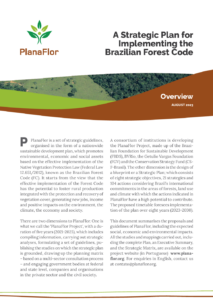
PlanaFlor: Overview
An overview of the strategic plan for implementing the Brazilian Forest Code.
Download
An overview of the strategic plan for implementing the Brazilian Forest Code.
Download
European Capacity Building Initiative Publication
This updated Pocket Guide on Loss and Damage highlights recent developments on the issue in the climate negotiations since 2018, including the agreement on a fund and funding arrangements for loss and damage.
Download
European Capacity Building Initiative Publication
2023 Edition of the Pocket Guide to the Paris Agreement provides updated information on where things stand with respect to the Articles of the Agreement.
Download
The report ‘Sustainable Textile and Clothing Industry: Main Challenges of Circularity in Brazil,’ aims to transform Brazil’s textile sector by presenting a comprehensive overview. Written by BVRio, in collaboration with the Circular Plastics in The Americas Programme (CPAP).
Download
BVRio is a non-profit organisation working at the intersection of economic, environmental and social sustainability. Our mission is to design and promote innovative market-based solutions for the benefit of the economy, the environment and people.
Download
This Monitoring Report template provides a form for projects (e.g. waste picker organizations) that carry out waste recovery (collection, sorting, proper disposal) to report the results of their monitoring activities.
It is designed to assist project lead organizations in compiling, organizing and reporting on the quantitative impact of activities.
Download
This Pocket Guide from ecbi sheds light on Article 6 of the Paris Agreement. A key part of the 2015 Paris Agreement, Article 6 sets out the basis for international cooperation on climate action, including both market and non-market mechanisms. Most of the details on how Article 6 will work were finalised in 2021 at COP 26 in Glasgow, meaning it is now ready to become operational. But how, exactly, will these different mechanisms really work in practice? What specific activities will be allowed under each of them? How will each be regulated? And where can one find further information? Ecbi’s latest Pocket Guide provides a one-stop shop for those seeking to understand this key part of the Paris Agreement, including the latest rules and decisions adopted by Parties to operationalize the mechanisms up to and including the meetings of the Subsidiary Bodies in June 2022.
Download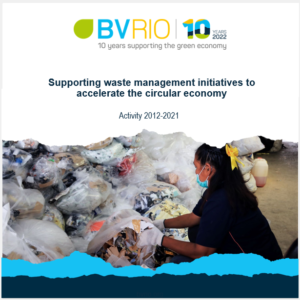
For the past decade BVRio has been at the forefront of developing market mechanisms to incentivise producers, such as food and drink companies, to work with the informal waste collection sector to safely, effectively, and profitably remove solid waste from the environment. These initiatives now have a global reach and have evolved over time to help meet new legislation and to utilise new technology.
Download
Since our foundation, 10 years ago, BVRio has been at the forefront of promoting the implementation of the Forest Code. To mark this anniversary, we have prepared a summary of our work in this space, including details of our actions of advocacy for the legislation, promotional campaigns, the creation of monitoring tools and market development, engagement with landowners, and more.
Download
This Validation Checklist is part of the Auditing Protocol of the Circular Credits Mechanism’s
Standard (CCS) – a set of documents to assist in the evaluation of waste recovery projects
interested in issuing Circular Credits (CCs) based on their activities, through the Circular Credits
Mechanism (CCM).


